
Oak spindles are the vertical infill elements that run between the handrail and baserail of a staircase balustrade, and the profile chosen for them defines the visual character of the entire staircase more decisively than almost any other single component. The three principal profiles available in solid oak are square, stop chamfered, and turned, and while all three serve the same structural function, they produce very different aesthetic results and suit very different properties and interior styles.
Choosing the wrong profile for the property creates a staircase that looks architecturally inconsistent, however well the individual components are made and finished. This guide explains each profile clearly and sets out how to decide which is right for a given staircase.
Square Spindles: Clean, Contemporary, and Minimal
A square spindle is exactly what the name suggests: a section of solid oak with a consistent square cross section running its full length. There is no decorative shaping, no chamfer, and no turning. The result is the most geometrically minimal spindle profile available, producing a balustrade with a clean, repeating rhythm of vertical lines that reads as deliberately architectural.
Square spindles suit contemporary and handleless kitchen adjacent interiors, new build properties with modern design language, and open plan renovations where the staircase is visible from a living area and needs to complement rather than compete with a minimal interior scheme. They pair well with square section newel posts, contemporary handrail profiles, and oak and glass balustrade designs where the spindles are used alongside or as an alternative to glass panels.
In a period property with traditional mouldings, cornice, and panelled doors, square spindles tend to look incongruous. The absence of decorative detail that makes them appropriate in a modern interior makes them visually sparse against a backdrop of period joinery.
Stop Chamfered Spindles: Subtle Detail for Transitional Spaces
Stop chamfered spindles have a square section with chamfered cuts applied at defined intervals along the length of the spindle, stopping before the top and bottom ends. The chamfers are typically cut at 45 degrees across each face, creating a subtle faceted detail that catches the light and gives the spindle visual interest without the complexity of a turned profile.
This is the most versatile of the three principal profiles. The stop chamfer adds enough detail to prevent the spindle looking plain in a traditional or period setting, while remaining restrained enough not to look heavy handed in a more contemporary or transitional interior. It suits the broadest range of UK property types and is a safe specification in properties that combine period architectural features with more modern interior elements, where a traditional turned spindle would look too formal and a square spindle would look out of place.
Turned Spindles: Traditional Character for Period Properties
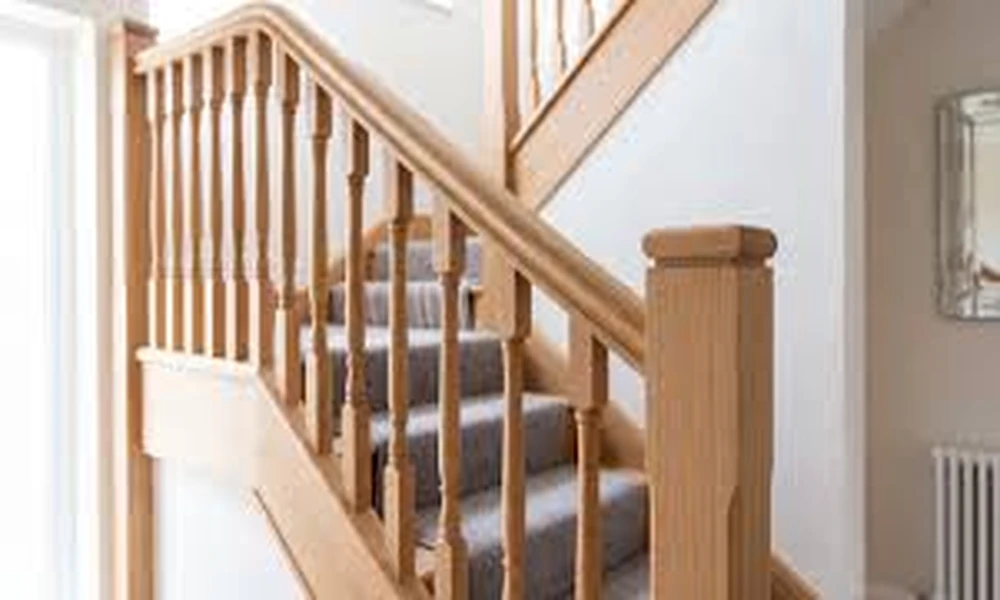
Turned spindles are shaped on a lathe to produce decorative curved profiles along their length, ranging from simple single-bead designs to more elaborate multi-bead and baluster forms. The turning concentrates decorative detail at defined points along the spindle, creating a profile that has visual weight and classical character.
Turned spindles are the historically appropriate choice for Victorian, Edwardian, cottage, and traditional country properties where the staircase is expected to reflect the architectural period of the building. They suit traditional panelled doors, period mouldings, and classical interior schemes. A comprehensive range of solid oak spindles in all three profiles is available from UK joinery specialists, with both 32mm and 41mm section sizes to suit different handrail and baserail groove widths.
Practical Specification Points
Whichever profile is chosen, several practical points must be confirmed before ordering. Spindle section size, typically 32mm or 41mm, must match the groove width of the handrail and baserail being used. Spindle length must account for the rake of the staircase, and a cutting list based on the actual stair geometry is the most reliable way to calculate the correct lengths for each position on the flight. Spindle spacing must comply with building regulations, which require that no gap in the balustrade allows a 100mm sphere to pass through, and this applies to replacement work as well as new installations.
Frequently Asked Questions
Can I mix different spindle profiles on the same staircase?
Mixing profiles on a single staircase is generally not recommended as the visual consistency of a single repeated profile is what gives a balustrade its character; a mixed profile approach typically reads as indecisive rather than deliberate.
What is the difference between 32mm and 41mm spindles?
The dimension refers to the cross-sectional size of the spindle; 41mm is the standard for most UK domestic staircase balustrades, while 32mm suits narrower configurations and some specific stair kit systems; always confirm the groove width in the handrail and baserail before ordering.
Do oak spindles need finishing after installation?
Yes; unfinished oak spindles should be oiled or lacquered after installation to protect the timber and produce a consistent finish across the entire balustrade; the finish applied should match the treatment used on the handrail, newel posts, and stair treads.
How do I calculate how many spindles I need?
Measure the total handrail run in millimetres, divide by the intended spindle centre spacing (typically 100mm to 115mm to comply with building regulations), and add one spindle per flight for the starting and finishing positions.
Final Thoughts
Oak spindle profile selection is one of the clearest examples of an architectural decision that is easy to get right and noticeable when it goes wrong. Square suits contemporary and minimal interiors, stop chamfered suits transitional and mixed period properties, and turned suits traditional and period homes.
Matching the spindle to the architectural character of the property and specifying all components in a consistent style produces a staircase that looks considered rather than assembled. Specialist suppliers of solid oak stair parts carry all three profiles across both standard section sizes for UK domestic staircase installations.