
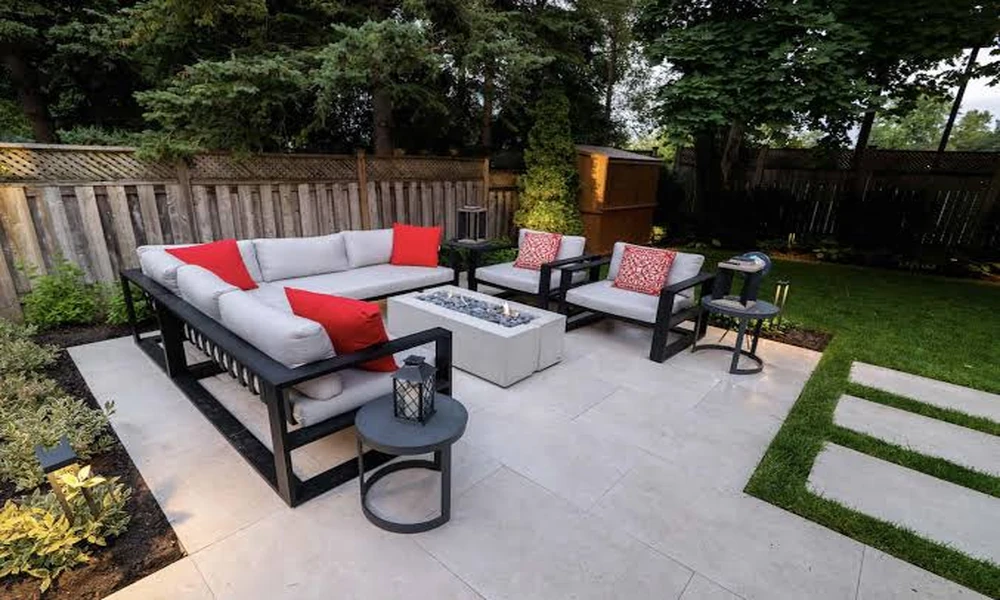
A patio that only gets used for six weeks in July isn’t really doing its job. Most homeowners picture summer evenings when they start planning a new outdoor space, but the reality of the seasons here means a well-planned area needs to handle a lot more than a few warm weekends. Spring rain, a humid July, a cool September evening, and the freeze and thaw that shows up every winter all put demands on the same stretch of yard.
Designing for the Weather We Actually Get
This region doesn’t really have one climate, it has four distinct ones packed into a single year. Spring often arrives wet, with the ground still soft from the last of the snowmelt. Summer brings stretches of real heat along with sudden thunderstorms. Fall cools quickly and can turn damp for weeks at a time, and winter puts everything through repeated freezing and thawing before spring starts the cycle over again.
A space built with only July in mind tends to struggle the rest of the year. Materials crack under freeze-thaw pressure, drainage that seemed fine during a dry summer suddenly can’t keep up with spring runoff, and furniture or planting chosen for looks alone doesn’t hold up once the weather turns. Thinking through all four seasons at the planning stage, rather than fixing problems after the fact, tends to save a lot of frustration later.
Choosing the Right Patio and Surface
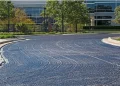
The surface underneath everything else is where a lot of these seasonal problems start, or get avoided. Materials that expand and contract differently than the base beneath them are prone to shifting, heaving, or cracking once the ground freezes and thaws a few times over. A properly done interlocking patio installation handles that movement far better than poured concrete, since individual pavers can flex slightly with the ground instead of fighting against it.
Surface texture matters too, especially somewhere that sees rain, snow, and ice at different points in the year. A smooth, glossy finish might look sharp in a photo, but it turns slick fast once it’s wet or frosted over, which isn’t ideal for an area meant for everyday use.
Planning Drainage, Shade and Planting
Grading gets overlooked more than almost anything else in outdoor design, and it’s usually the first thing that causes problems once the weather turns. Water needs somewhere to go, and if the ground slopes toward the house instead of away from it, that becomes obvious the first time there’s a heavy rain.
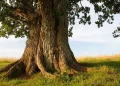
Shade matters just as much, particularly during a stretch of summer heat, when a hardscaped area without any tree cover can turn uncomfortable by early afternoon. A pergola, a well-placed tree, or even taller shrubs positioned correctly can be the difference between a space that gets used daily and one that only gets used in the evening. Mixing hardscaping with actual planting, rather than treating them as two separate projects, tends to produce a space that looks intentional and holds up through more of the year.
Making the Space Practical and Easy to Maintain
A space that demands constant upkeep tends to get used less over time, not more. Choosing materials and plantings that don’t require hours of work each week keeps the space appealing through a full season instead of just the weeks right after it was finished. Perennials that return on their own, mulch that suppresses weeds, and hardscaping that doesn’t need yearly sealing all reduce the ongoing workload considerably.
This is where working with backyard landscaping services rather than tackling everything piecemeal tends to pay off. Getting the grading, surface materials, and planting plan coordinated from the start avoids the common problem of a yard that ends up looking like a collection of separate projects instead of one cohesive space.
A Space Built to Last
The best outdoor spaces aren’t designed around a single perfect weekend. They’re built with the full range of weather in mind, from a soggy spring to a hard winter freeze, so the space holds up and stays usable well beyond a few short weeks each year.